
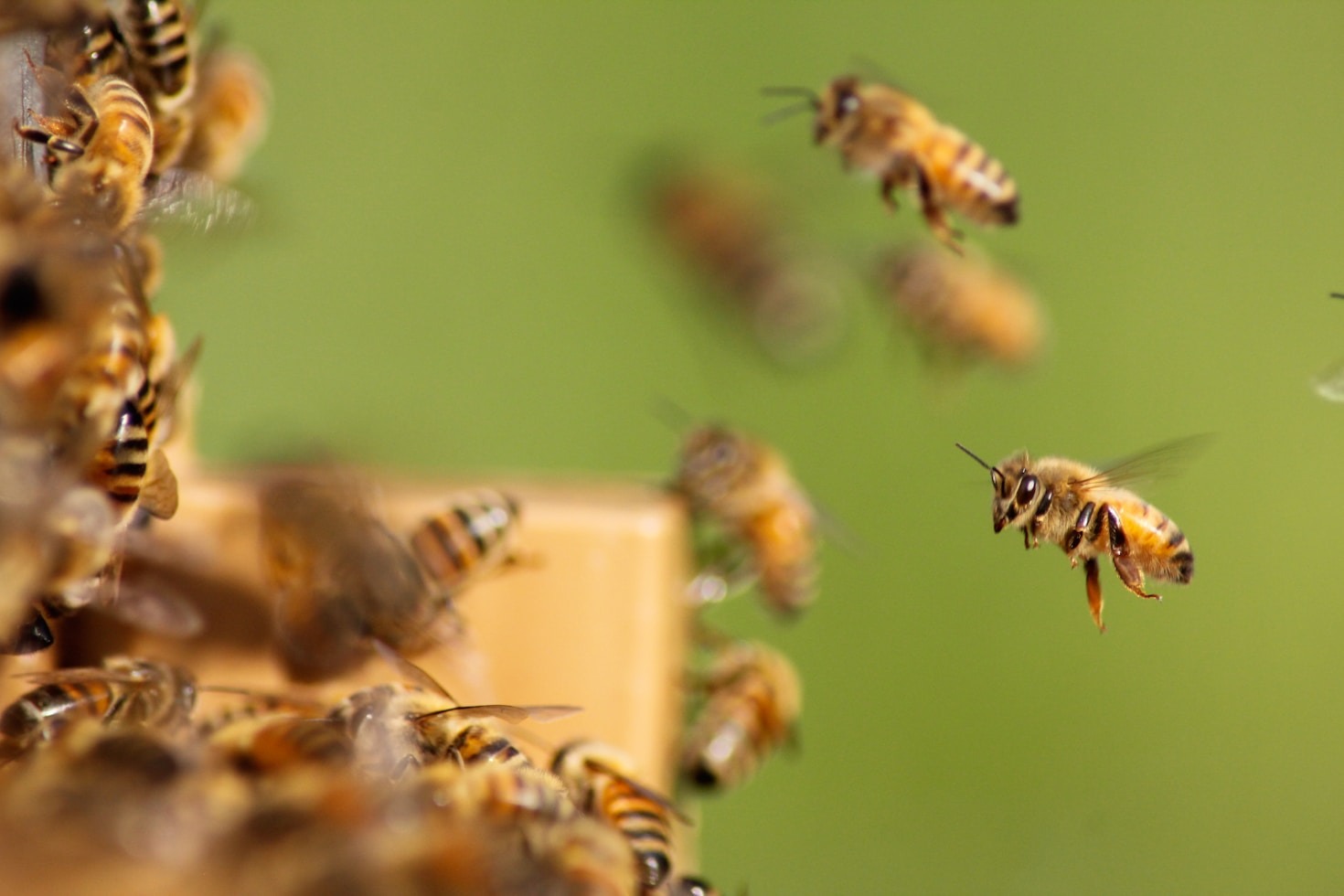
Kids meet the beekeeper & hear about the secret world of bees!
In her beautiful new book, folklorist and third-generation beekeeper, Eimear Chaomhánach, reveals the fascinating stories that surround beekeeping in Ireland. She talks to Stephen Meyler about these age-old mysteries.
- RTÉ Guide
- 24 Mar 2025
“I love the story about Aristotle and the bees. It’s a folk tale that’s known internationally, but in Ireland, we have our own unique rendition of the story.” Eimear Chaomhánach is telling me about the Cork beekeeping legend ‘Harry Stattle’, evidence of the rich and quirky folklore that has grown up in the many centuries that people have tended hives of honeybees across the island. “Aristotle was known to be one of the most clever of all men: a philosopher, scientist, inventor and so on,” Eimear continues.
“But there were three things that Aristotle tried but failed to understand: the ebb and flow of the tide, a woman’s mind and the work of the honeybee.
“I suppose what we’re saying is the honeybee outsmarts the clever of all men. In the Irish version is of that story, like all folklore, was passed on from generation to generation and over the centuries, the name Aristotle evolved into Harry Stattle, which is how it is remembered in Cork.”
In that story, Harry Stattle is characterised as a rather arrogant, impatient man, not the ideal person to have a successful bond with domestic bees.
“You can learn how to be a beekeeper,” says Eimear. “Anyone can learn, but it definitely demands a calm temperament because the one time bees are going to sting you is when you react in fear of them buzzing around you.
“In folklore, we would say that they sense the fear, but they’re actually frightened. So they will attack. When I see my dad beekeeping, I look at him like it’s a meditative process. Every move is considered, and you can’t go in being brash or rushed. That calmness would be top of the list for your own good and for the good of the bees.”
However, Eimear reckons that the calmness it takes to be a beekeeper can be learned. “People are learning how to bee keep bees all over the place now, so that calm will come with time, once you realise agitated movements will agitate the bees.”
Eimear’s research for the book involved interviewing beekeepers, as well as time spent in the country’s biggest archive of folklore material at UCD. Unlike many aspects of modern Irish life, she found that folklore is still a big part of beekeeping. “Having interviewed older generations of beekeepers, I would say that there are lots of practices that beekeepers have that they wouldn’t necessarily know were absorbed folklore from stories heard over the years.”
Her father Pat keeps hives in Dublin, Wicklow and sometimes Wexford (following in the measured footsteps of his father), so it’s no surprise that his recollections have made their way into the book. “When I first started recording my dad, he had no idea that what he was doing, and the stories he had heard, he had absorbed over the years from my grandfather.” One of the most unusual rituals that has been passed down the generations among beekeeping families is called ‘telling the bees.’ Eimear explains “It’s a beloved tradition that people are really passionate about. When Queen Elizabeth died in the UK, the beekeeper in the palace went and told the bees that she had died, and that’s stirred in people the memory of that, even here, where ‘telling the bees’ was carried out since the 18th Century. People are upholding these folkloric traditions without necessarily defining them as folklore.”
Most folk tales are designed to tell a truth about life, and Eimear says that beekeeping folklore is no different. “Folklore often derives from practicality. If you take the simple advice that it’s bad luck to walk under a ladder, that’s coming from a very real possibility that you could get paint on your head.
“There’s lots of luck and misfortune associated with bees. A good example of this is that it’s supposed to be good luck if a bee comes into your house. It’s supposed to be bad luck if that bee dies in your house. But that goes further: it’s good luck if a swarm comes into your garden. However, if you wrongfully claim a swarm that is not yours, that will bring you bad luck. When I was looking at where this come from, it’s a very practical place. The Brehon Laws, which were the laws that people in Ireland lived by in medieval times, worked very hard to delineate between the rightful and wrongful ownership of bees. To deter people from claiming a swarm that wasn’t theirs, folklore said, well, if you claim those, bad luck will come to you. It’s a bit like leaving that fairy bush in a field, because people don’t want to take that chance.”
Article Name:Kids Meet the beekeeper
Publication:RTÉ Guide
Start Page:24
End Page:24
Leave a Reply