
Published in Ireland’s Own Magazine, Nov 2024.
Bees and beekeeping are woven deep into the fabric of my life, from as early as I can remember. My father, Pat Kavanagh, has practised beekeeping for 70 of his 85 years. But it is more than a practice: it is the core of his existence, deeply anchored in story and in parcels of knowledge passed down through the generations.
As I researched the folklore of bees and beekeeping in Ireland, the theme of bees as a spiritual entity emerged. In both Irish and international folklore, bees have been revered as almost sacred in nature for centuries. Legend describes the origin of bees on earth and their arrival into Ireland as a divine intervention. This sense of the sacred permeates their by-products, honey and wax, to which healing powers are attributed. In Irish folklore, this veneration is proudly celebrated and is evidenced by bees having their own patron saint, Gobnait, with many counties across Ireland laying claim to her.
Folklore offers us a tantalising window into the beliefs, practices and reverence that beckon the humble bee to take a seat among the divine. We have only to look at the rich benefits we reap from the labour of the bee to begin to recognise its noble standing; produce that brings light, has medicinal properties and sweetens.
It was the anticipation of collecting his own honey that enticed Dad to start beekeeping as a child growing-up in Ballindaggin, Co. Wexford. He was gifted his first ‘nuc’ or nucleus of bees by his neighbour, Joe Doyle. Folklore suggests this to be the most appropriate way of transferring ownership of bees from one person to another, considering it somewhat crass to have base money pass hands when dealing with the noble bee. At the age of fourteen, Dad sold honey for the first time, to Rowans, a Dublin grocer who came to Wexford to hold a honey market annually. He sold 1lb of honey for one shilling and sixpence and made £7 that day. This sale ensured that sweetness in the form of ‘liquid gold’, as he calls it, would be in full supply from that year onwards
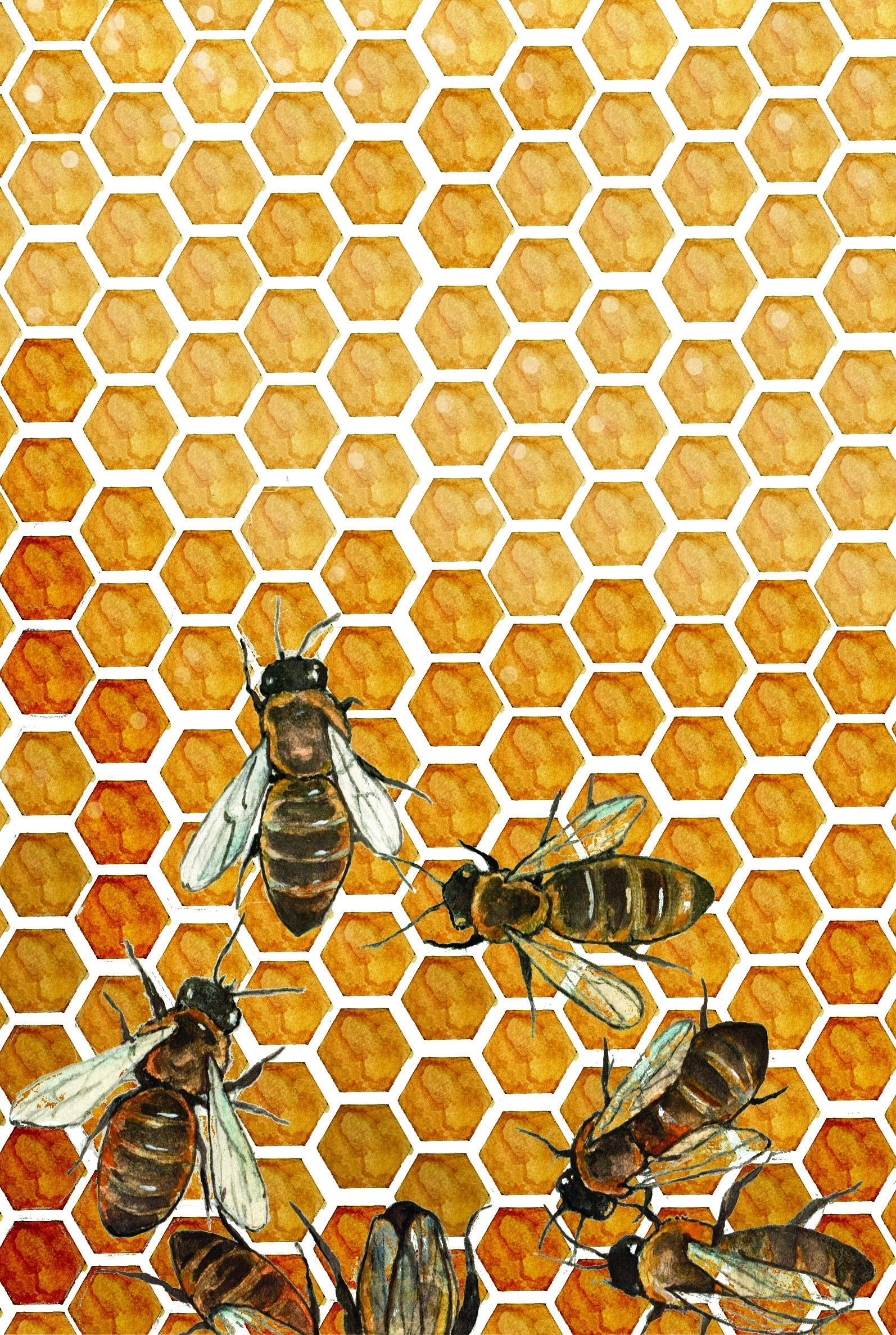
As many beekeepers will attest, the fecundity of bees to impress and trigger curiosity creates somewhat of a magnetic draw that has, in my father’s case, sustained his continual interest in bees for decades. The bees’ ability to run an industrious, matriarchal society with designated roles, to construct a perfectly hexagonal comb and to communicate via a dance performed by bees alone, offers a rationale as to why bees are portrayed as the most superior of all creatures in lore and legend.
Being the epitome of wisdom, it follows that bees continually outwit us mere mortals in folklore. In fact, even the pioneering philosopher, scientist, inventor and naturalist Aristotle, is outsmarted by the honeybee. The folktale describes three phenomena that Aristotle tried but failed to understand: the ebb and flow of the tide, a woman’s mind and the work of the honeybee. The magical essence of this story derives from the unique characteristics it has inherited, being shared orally and passed from one generation to the next, through storytelling. And so, we are introduced to ‘Harry Stattle’, rather than Aristotle, who became tormented by the mysterious workings of the hive.
As bees are beheld as an intelligent and gentle species, it is unsurprising that they are deemed trusted indicators of good luck or misfortune and are integrated into family life. It is considered a polite act to inform bees of important household events, such as weddings, births and most poignantly, deaths. This practice of ‘telling the bees’ is one of deep respect, and signals how highly bees are regarded.
This unique bond between the bee and its keeper has a rich and pervasive presence in folklore. From my encounters with beekeepers all over Ireland, it seems to me that the beekeeper is more of a caretaker or caregiver. It is a constant and special level of attention that positions bees as an integral facet of a beekeeping household. As caregivers, beekeepers are onlookers of these masters of ingenuity.
Thankfully, bees are being recognised as highly effective pollinators, something known intuitively by our ancestors. The knowledge that bees play an essential role in the maintenance of a balanced global ecosystem is encouraging a growing number of budding beekeepers. In recent years, it seems we are all becoming carers of the bees and playing a minor part in their magnificent existence.
Leave a Reply